
Resources
Timber guides & reference
Practical information for trade buyers. Grades, species, treatments, and what to specify for different applications.
Guide
SE KD Explained
SE KD is the standard specification for joinery grade timber in the UK. It stands for Square Edged (SE) and Kiln Dried (KD). Here's what each part means — and why it matters.
Square Edged (SE)
Square edged means the timber has been sawn to produce clean, square edges — as opposed to waney edge (live edge) boards which retain the natural curve of the trunk and may include sapwood and bark.
SE boards are sawn parallel on both faces and both edges, giving a consistent rectangular section throughout the length. This is the standard form for joinery and construction use.
Why it matters: Waney edge boards require further conversion before use. SE timber is ready to machine, join, or fix directly — no additional resawing needed.
Kiln Dried (KD)
Kiln drying reduces the moisture content of timber in a controlled environment to a target level. For structural timber, this is typically 12–18%. For joinery, the target is often lower — 12% or less to match internal humidity levels.
Air drying is slower and less precise. Kiln drying is consistent, faster, and necessary for modern supply chain timescales.
Why it matters: Green (wet) timber moves significantly as it dries in service. KD timber is dimensionally more stable, machines more cleanly, and takes adhesives and finishes better.
Our standard
The majority of our stock is kiln dried and square edged, we are able to source fresh sawn / green timber, graded timber and other special requirements.
Guide
Hardwood species — what to specify
European Oak
Quercus robur
Best for
Windows, doors, furniture, structural, exposed beams
Characteristics
Dense, durable, distinctive ray fleck. Tannins can cause staining with iron fixings — use stainless or galvanised.
FSC®
Available
Sapele
Entandrophragma cylindricum
Best for
Doors, windows, furniture, internal joinery
Characteristics
Interlocked grain gives ribbon-stripe figure. Machines well. Rich mahogany-like colour. Easier to work than true mahogany.
FSC®
Enquire
Iroko
Milicia excelsa
Best for
External joinery, windows, outdoor furniture, decking
Characteristics
High natural durability (Class 2). Good teak alternative. Slightly coarser grain. Works well, though interlocked grain can cause tearout if not cutting with the grain.
FSC®
Enquire
Accoya®
Acetylated Pinus radiata
Best for
External windows, doors, cladding — wherever maximum durability is needed
Characteristics
Dimensionally stable, Class 1 durability, 50-year above-ground guarantee. Takes paint and coatings exceptionally well. Machines like a softwood but performs like a hardwood.
FSC®
Certified
Guide
Timber grades — what they mean
Structural grades: C16 and C24
C16 and C24 are the two main strength classes for structural softwood in the UK, defined in BS EN 338. C24 is stronger and stiffer. For most structural joinery applications, C16 is sufficient. Specify C24 where higher loads or longer spans require it, or where your structural engineer has specified it.
All our softwoods are graded to at least C16. C24 is available — enquire when ordering.
Hardwood grades: FAS, Prime, and Unsorted
Hardwood grading is less standardised than softwood. Common terms:
- FAS (Firsts and Seconds): The highest American hardwood grade. Clear faces, minimal defects. Used for fine furniture and high-end joinery where clear material is needed.
- Prime / Select: High quality with limited knots and defects. Good for joinery and furniture applications.
- Unsorted: For European softwoods, particularly Redwood — 'unsorted joinery grade' is the established specification for joinery quality material. A mix of grades, but conforming to minimum joinery standards.
Panel product grades
Plywood is graded by face and back veneer quality (A–D), with A being the best. E1/E0 refers to formaldehyde emission class. Structural panels (OSB, plywood) are graded by structural application: OSB2 (dry conditions), OSB3 (humid conditions).
MDF and chipboard are graded by density and moisture resistance (standard, moisture resistant). Our Rezult MR-MDF exceeds standard MR specification.
Guide
Quarter Cut & Crown Cut veneers
Veneered MDF and plywood are available in two main cut types. The cut determines the grain pattern, figure, and stability of the face veneer — and makes a significant visual difference to the finished panel.
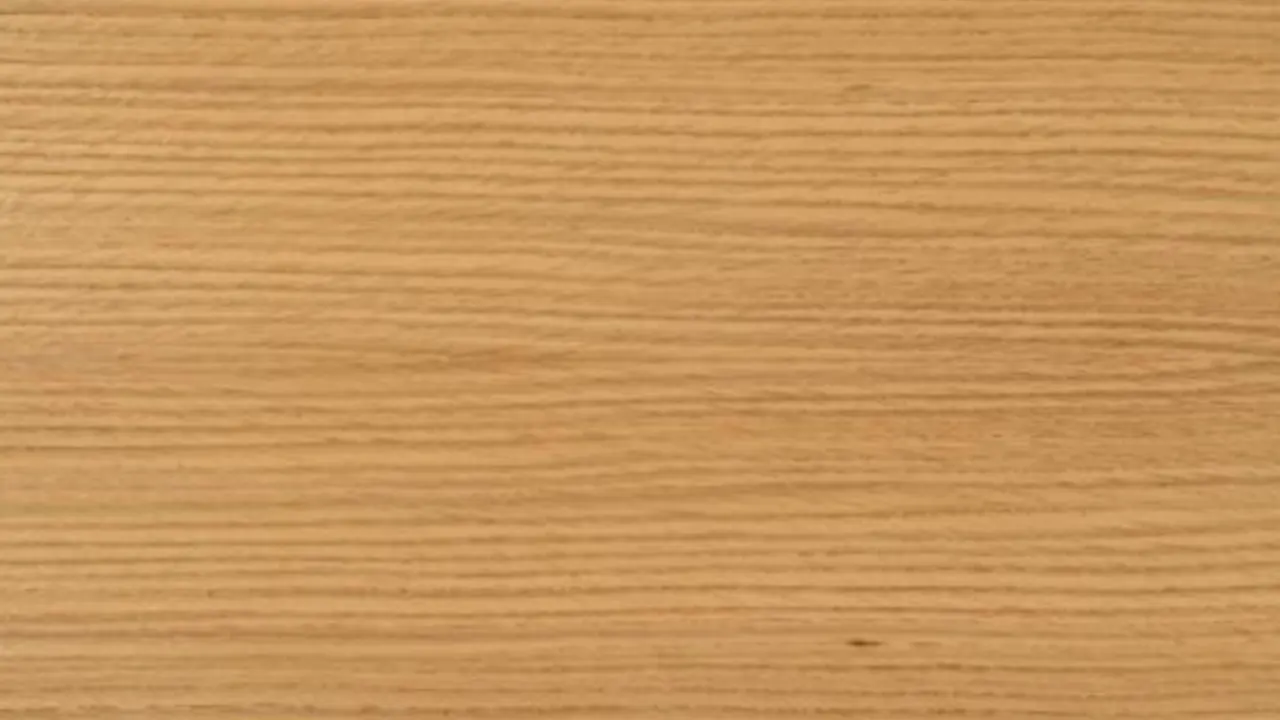
Quarter Cut QC
Quarter-sawn boards are produced by first quartering the log lengthwise, then cutting each quarter successively along the radius. This results in annual rings running roughly perpendicular to the face of the veneer.
Grain appearance: Straight, tight, parallel lines — a consistent striped effect. Medullary ray fleck is prominent in oak and beech, giving a distinctive silvery shimmer.
Stability: Greater dimensional stability. Less movement across the width, less warping, shrinkage, shake, and splitting compared to Crown Cut.
Best for: Contemporary and traditional joinery where a calm, uniform grain is preferred. Doors, panels, and furniture where movement is a concern.
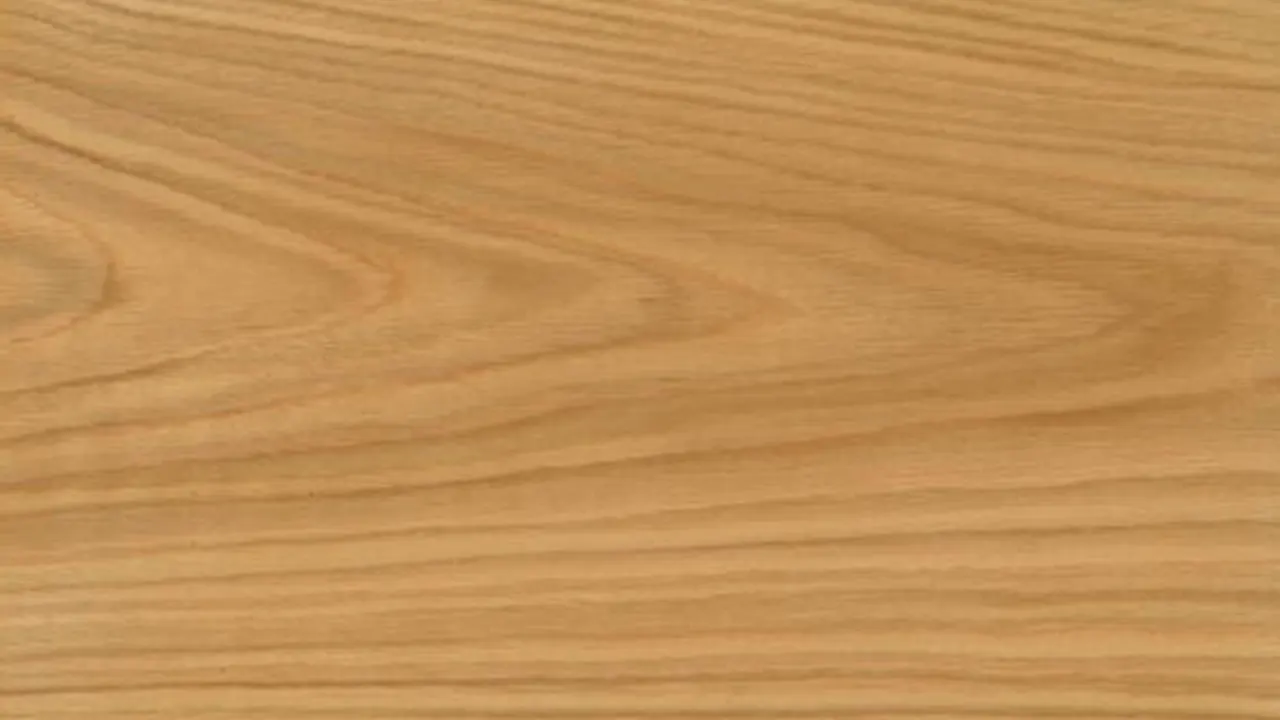
Crown Cut CC
Crown Cut veneers are sliced using a machine in which the flitch (piece of log) is raised and lowered against a fixed blade. Each slice cuts across the growth rings, working progressively from the outside of the log inward.
Grain appearance: Arching "cathedral" or flame pattern — the distinctive flowing figure most people associate with decorative wood veneer. More varied and organic than Quarter Cut.
Stability: Slightly more prone to movement than Quarter Cut, but as a face veneer on MDF this is largely mitigated by the substrate.
Best for: Decorative panelling, furniture, and shopfitting where a bold, figured grain is desirable. The more widely available and lower-cost option.
Our range
Oak MDF is available in both Crown Cut and Quarter Cut. Other species (ash, walnut, maple, sapele, cherry, beech, pine) are Crown Cut as standard. Contact us to discuss specific requirements.
Reference
Panel product reference data
Approximate weights and running metre calculations for common panel products. Useful for estimating loads and quantities.
Sheet weights
Kilograms per 2440 × 1220mm sheet — approximate, may vary by manufacturer
| Product | 2mm | 3mm | 4mm | 6mm | 9mm | 12mm | 15mm | 18mm | 22mm | 25mm | 30mm | 38mm |
|---|---|---|---|---|---|---|---|---|---|---|---|---|
| Birch Plywood | 9 | 14 | 19 | 26 | 32 | 38 | 41 | — | 53 | — | — | — |
| Poplar Plywood | — | 11 | 15 | 19 | 22 | — | — | — | — | — | — | — |
| Gaboon Marine | 6 | 9 | 14 | 18 | 23 | 27 | 31 | — | — | — | — | — |
| FE Plywood | — | 8 | 12 | 18 | 24 | 30 | 36 | — | 50 | — | — | — |
| Softwood Ply | — | — | — | 21 | 31 | — | — | — | — | — | — | — |
| Chipboard | — | — | — | 22 | 33 | — | — | — | — | — | — | — |
| Hardboard | — | — | 10 | — | — | — | — | — | — | — | — | — |
| MDF | 6 | 7 | 9 | 14 | 17 | 23 | 29 | 34 | 42 | 50 | 64 | 85 |
| MDF MR | — | — | 14 | 20 | 27 | 33 | 40 | 47 | 55 | 66 | — | — |
Running metres per cubic metre
For guidance only — calculations based on nominal dimensions
| Thickness | Running metres / m³ |
|---|---|
| 25mm | 50 |
| 32mm | 225 |
| 38mm | 178 |
| 50mm | 139 |
| 63mm | 117 |
| 75mm | 89 |
| 100mm | 71 |
| 200mm | 60 |
| 225mm | 45 |
Need help specifying?
Call us and talk through your project. We've been doing this since 2005 — we can help you specify the right product for the right application.